From our engineering perspective, we see this almost every season. A massive summer storm hits, and suddenly a dozen or so hectares of concrete yard turn into a raging river. Stormwater drainage in industrial areas is in a completely different league to the simple pipes under a detached house. Here, the gigantic, watertight roofs of the halls and kilometres of internal asphalt roads generate extreme amounts of water in a fraction of a second. The system must absorb this impact without the slightest hesitation.
Rainwater relentlessly washes over the hot manoeuvring areas. Along the way, it picks up grease residues, brake pad dust and oily spills from lorries. Before this chemical concoction reaches the local river or the municipal sewer system, we must contain it, slow it down and clean it effectively. Mistakes at this stage result not only in flooded storage docks, but also in hefty fines from environmental inspectors.
The anatomy of an industrial flood: how it all works underground
A well-designed system begins its work where the first heavy raindrops fall. Ordinary, point-type street drains often prove inadequate here. On large manoeuvring areas and in loading bays, developers must install powerful linear drainage systems. It is these that capture the initial surge and direct it into the underground pipe network. However, our many years of observation show that simply channelling the downpour into the drain is only half the battle. The real engineering challenge lies in the speed of its underground transport.
During a sudden change in weather, infrastructure cannot rely on average climate data from the past decade. We must always design systems to cope with the most extreme scenarios. If the cross-sectional area of the main discharge sewer is even slightly too small, a dangerous backflow will occur immediately. Water will surge violently back through the grates, flooding the lower-lying unloading ramps. That is why modern drainage systems rarely discharge rainwater directly outdoors, but first safely direct it to large retention basins.
Before the water leaves the plant, it passes through rigorous filtration systems. Sand traps and oil separators are the unsung heroes of this system. They wash out heavy fractions and environmentally hazardous chemicals. Only once the liquid has been pre-treated in this way and its flow significantly slowed down can it legally enter the municipal network. It is a highly precise chain of interconnected vessels. If just one element at the very start of the system becomes blocked, the rest of the infrastructure is instantly submerged.
Where are designers digging their own graves? Mistakes that come at a high cost
The most common mistake is a gross underestimation of the water balance. It is not uncommon for us to analyse failed projects where someone simply forgot to take future hall extensions into account. The site has been completely concreted over, the absorbent surface of the lawns has disappeared for good, and old, narrow pipes remain underground. The result is easy to predict. At the first heavy downpour, the old infrastructure immediately becomes overwhelmed by the excess water. We encounter errors in the geometry of the surface itself just as frequently. The most expensive and extensive underground network is of no use if the contractor has profiled the asphalt gradients incorrectly and the water flows wide of the drainage grates.
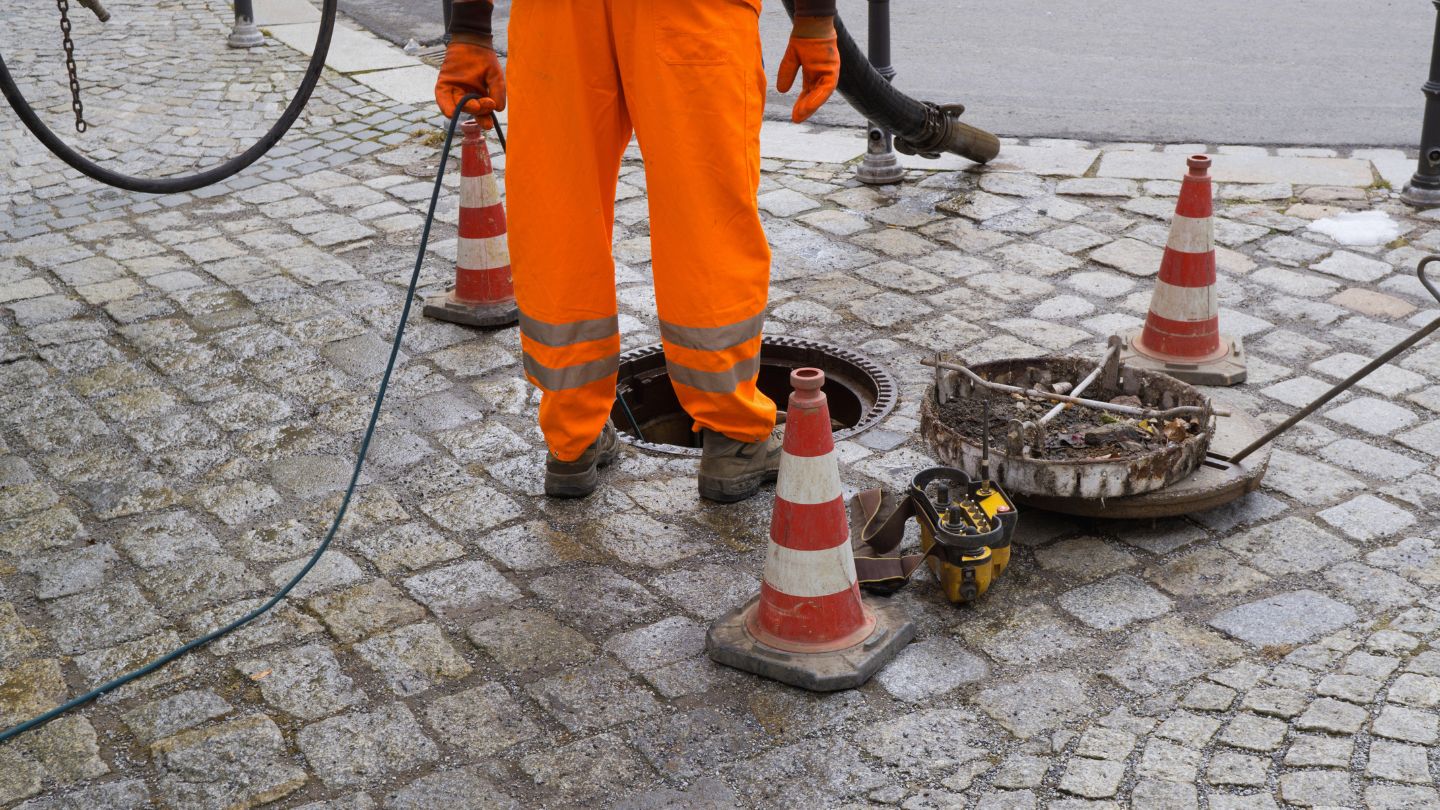
The second major problem is the naive illusion of ‘maintenance-free’ operation. Investors spend hundreds of thousands of zlotys on powerful separators and modern drainage systems, only to completely forget about them for years on end. In our maintenance work, we regularly open the hatches of sedimentation tanks that are filled to the brim with mud, gravel and rotting leaves. The system’s capacity is drastically reduced. When a storm hits, the water simply rushes over the clogged grates, and the manoeuvring area turns into a shallow lake before the eyes of the shocked security staff.
Summary
Stormwater drainage in vast industrial areas is a complex defence system, not merely a haphazard collection of plastic pipes buried beneath concrete. The system must be able to handle massive rainfall in the blink of an eye, filter out toxic pollutants and discharge the water into the environment in a strictly controlled manner. Our experience clearly shows that only perfectly calculated gradients, well-designed buffer capacities and rigorous cleaning of drains can protect a factory from logistical paralysis. Water does not forgive engineering shortcuts and, during every storm, will mercilessly expose the weakest point in the infrastructure.