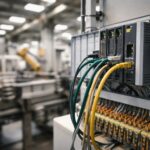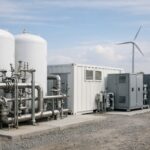

An emergency power supply isn’t just a huge generator parked behind the factory. It’s a complex backup system. It takes control of the factory when the mains power suddenly fails. The aim is simple: to keep critical systems running and prevent an uncontrolled production disaster.
There is no room for one-size-fits-all solutions here. The system is chosen based on how much a power cut would hurt the business. Does a production line stoppage mean ruined materials and losses running into millions? In that case, the system must kick in immediately. Is a brief outage merely a nuisance for staff? Then a much simpler and cheaper solution will suffice.
A UPS and a generator: a bridge and solid ground
Let’s start with the basics. The simplest option is a standard generator. The mains power fails, the automatic system sends a signal and the combustion engine starts up. There is a catch, however. Start-up takes several seconds or even tens of seconds. For sensitive automation systems, that is an eternity. The controllers will have time to reset, and production will come to a complete standstill anyway.
This is where the UPS system comes in. These are powerful batteries that provide a completely uninterrupted power supply. They protect servers, PLC controllers and the heaviest drives. However, there is one thing to bear in mind. A UPS is not a permanent power supply. It is merely a technological stopgap. It buys time to safely shut down the machinery or start up the main generator.
In large facilities, multi-source power systems are installed. These facilities are supplied by two independent medium-voltage lines. In addition, there are large generators and cascades of UPS units. The whole system is controlled by an intelligent ATS (Automatic Transfer Switch) system. It determines the safest source of power at any given moment.
Who needs a bunker, and who just needs a torch?
Not every building requires a robust infrastructure. In a small office block, it’s straightforward. All you need is a small UPS for the server room and a compact generator. This will allow staff to save their important files and go home with peace of mind. The costs are low, and the solution is more than adequate for data protection.
The challenges begin in traditional industry. Here, a power cut often results in machines grinding to a halt or materials being ruined in furnaces. This requires powerful generators and dual power supplies. It is essential to precisely isolate the circuits that absolutely must not lose power. The complexity of the system and its cost then rise significantly.
At the very top of this pyramid are critical facilities. We’re talking about hospitals, data centres and airport infrastructure. In these places, the power simply cannot be allowed to go out. Multiple layers of redundancy are employed. UPS systems and generators are physically duplicated. The costs of building such installations are enormous, but the risk of failure must be zero.
The art of choice. What do we keep, and what do we cut out?
The most common mistake investors make is trying to power the entire plant from a backup supply. It’s a business dead end. A generator capable of powering an entire factory costs a small fortune. It also burns through huge amounts of fuel. A sensible emergency power supply always requires a strict selection of loads.
The designer must sit down with the production engineer and divide the machinery into three distinct categories. What must run continuously? Usually, this includes cooling pumps, servers and fume extractors. What can be started up after a minute? Hall lighting and some transport systems. And what do we shut down completely? Air conditioning in offices and non-critical auxiliary machinery.
A lack of such selectivity leads to disastrous consequences. When the power supply fails, the backup system attempts to power up the entire factory at once. This results in a massive overload of the electrical system. The main circuit breakers trip, and the plant is plunged into darkness regardless. The generator shuts down, overwhelmed by the load, and the entire production line comes to a standstill.
The illusion of safety and brutal combat tests
Have you bought a powerful generator and a large UPS? Congratulations. But that’s just the start of the journey towards safety. A system that isn’t tested regularly is nothing more than a dangerous illusion. Backup equipment often lies dormant for years in the cold or in basements. When it’s suddenly needed, it often simply fails to work.
The batteries in UPS units lose their capacity over time. If no one checks them, the system will fail after a minute rather than the promised hour. In generators, the fuel goes off. Filters become clogged, and a diesel engine that hasn’t been started simply won’t start. Old ATS systems can also jam mechanically.
That is why the only reliable test is a ‘live’ load shedding exercise. The plant’s main power supply must be cut off regularly to observe the response. Only then can one see whether the automatic system switches between sources seamlessly. Without such rigorous testing, the first real power failure will mercilessly expose the state of the infrastructure.
Summary – Backup power supply
A backup power supply in industrial facilities and plants is never simply a single device plucked from a catalogue. It is a complex, multi-layered system that must be tailor-made and aligned with the actual financial risks. A well-designed and regularly tested system will quietly save the plant from a major disaster. Conversely, a poorly chosen system left without maintenance will simply burn through the investment budget, offering absolutely no protection when the moment of truth arrives.